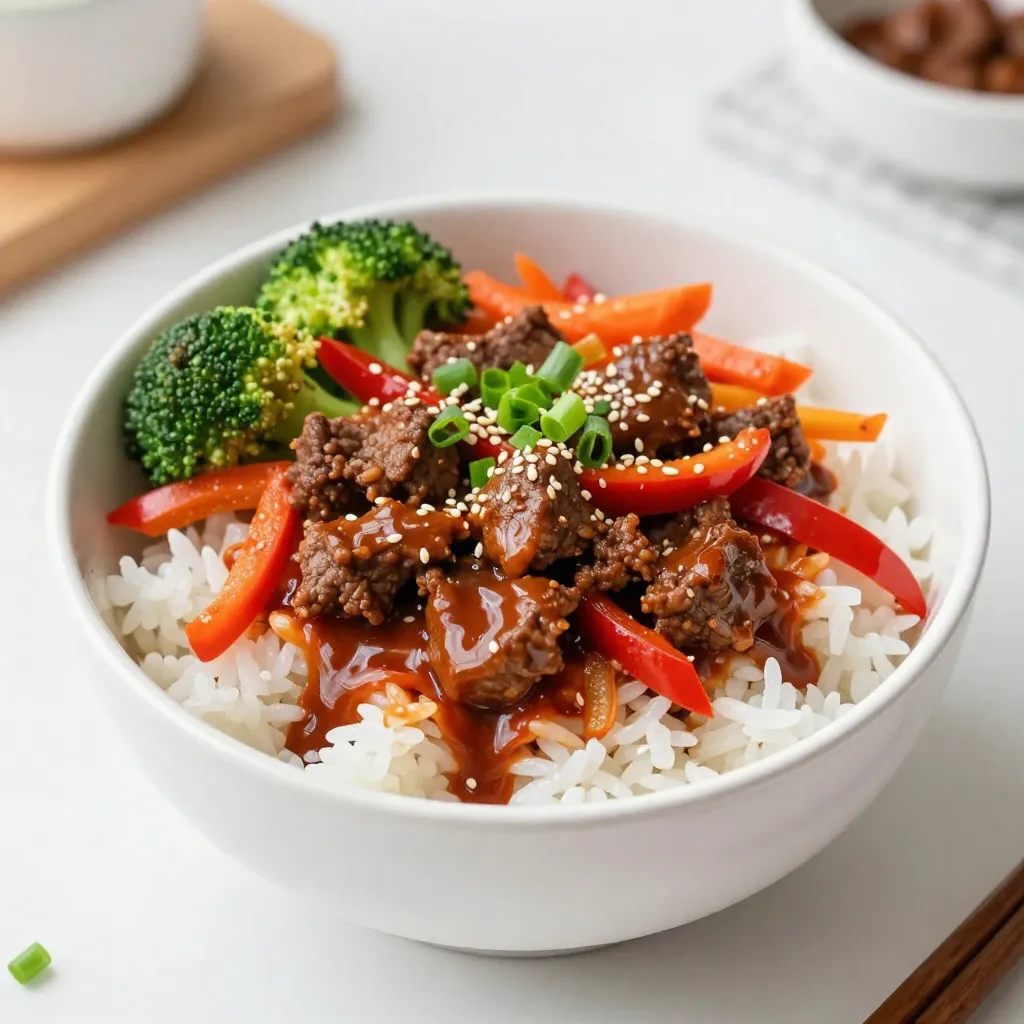
Are you craving a meal that packs a punch? My Spicy Korean Beef Bowls are the answer! This dish blends rich ground beef, vibrant veggies, and zesty gochujang for an explosion of flavor. It’s not just delicious but also easy to make. Let’s dive into the colorful world of Korean cuisine and explore how to whip up a tasty bowl that will impress your family and friends!
Why I Love This Recipe
- Bold Flavors: This recipe boasts a delightful combination of savory and spicy flavors that create an exciting taste experience.
- Quick and Easy:
- Customizable Veggies: You can easily swap in your favorite vegetables or whatever you have on hand, making it versatile for any palate.
- Healthy and Satisfying: This dish is packed with protein and vegetables, making it a nutritious choice that will keep you full and energized.
Ingredients
Main Ingredients
– 1 lb ground beef (80% lean, 20% fat)
– 3 tablespoons soy sauce
– 1 tablespoon gochujang (Korean chili paste)
Vegetables and Garnishes
– 1 cup broccoli florets
– 1 red bell pepper, thinly sliced
– 2 green onions, thinly sliced
Cooking Essentials
– 1 teaspoon sesame oil
– 3 cloves garlic, finely minced
– 1 tablespoon fresh ginger, grated
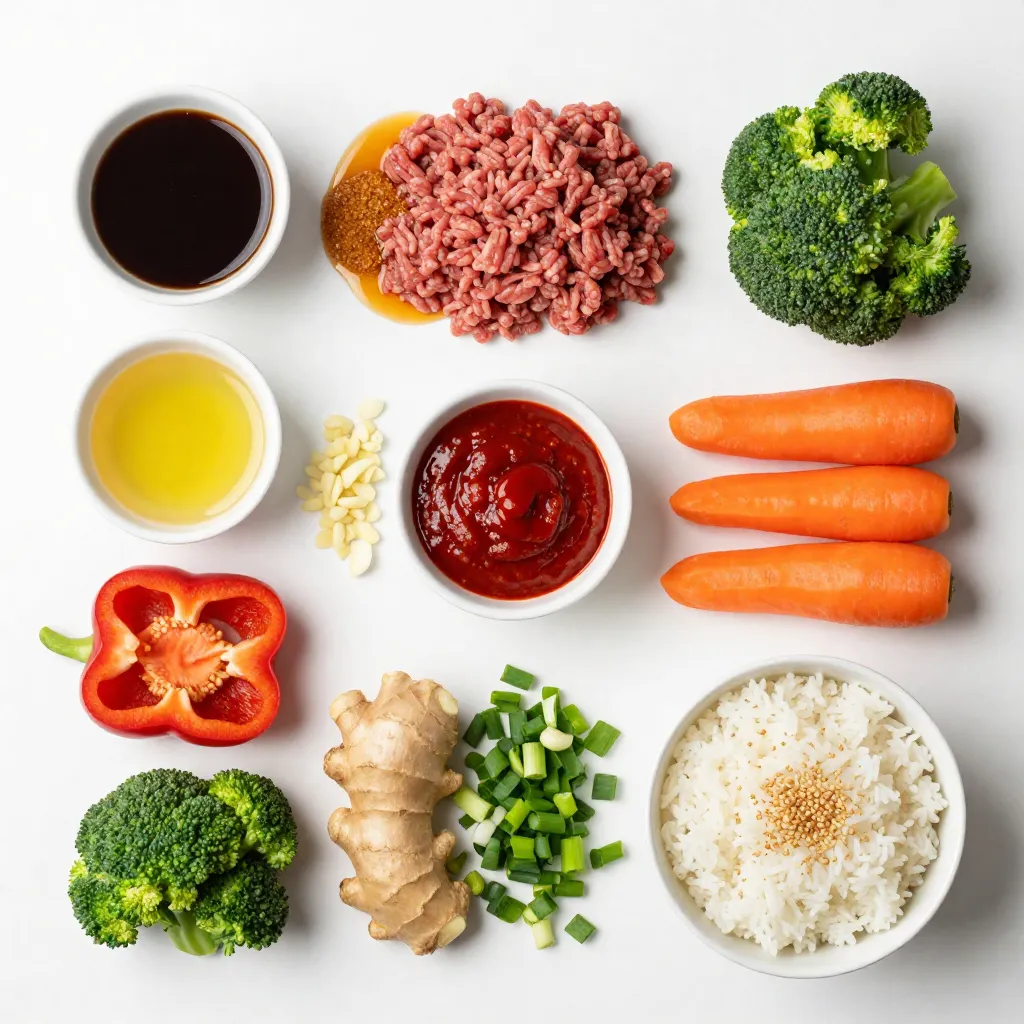
When making Spicy Korean Beef Bowls, the right ingredients matter. Ground beef serves as the hearty base. I like to use beef that is 80% lean. This gives great flavor without being too greasy.
Soy sauce brings a salty kick. It adds depth to the beef. Gochujang is a must for this dish. This Korean chili paste gives it spice and a unique flavor.
For veggies, I choose broccoli, red bell pepper, and green onions. Broccoli adds crunch and color. The red bell pepper makes the dish sweet and bright. Green onions are perfect for garnishing. They add freshness and a pop of color.
Don’t forget the cooking essentials. Sesame oil boosts the dish’s nuttiness. Garlic and ginger are key for flavor. They bring warmth and zest to the beef.
With these ingredients, you set the stage for a delicious meal. Each one plays its part in making these bowls tasty and fun.
Step-by-Step Instructions
Cooking the Beef
Start by heating a large skillet over medium heat. Add 1 pound of ground beef to the skillet. Cook the beef for 5 to 7 minutes. Break it apart with a spatula as it cooks. You want it evenly browned. Once browned, drain any excess fat. This helps keep the dish savory and not greasy.
Mixing and Simmering
Next, lower the heat to low. Add the following seasonings to the beef:
– 3 tablespoons soy sauce
– 2 tablespoons packed brown sugar
– 1 tablespoon gochujang (Korean chili paste)
– 1 teaspoon sesame oil
– 3 cloves garlic, finely minced
– 1 tablespoon fresh ginger, grated
Stir well to mix all the flavors. Let this simmer for 3 to 4 minutes. This step is key. It allows the flavors to meld together, making each bite delicious.
Preparing Vegetables
Now, it’s time to prepare the vegetables. If you like crisp-tender veggies, steam 1 cup of broccoli florets for about 3 minutes. They should turn bright green and be tender but still crunchy. If you prefer, you can add the broccoli directly into the beef mixture instead.
Next, add sliced red bell pepper and julienned carrot to the beef. Sauté for an additional 3 to 5 minutes. You want the veggies to be tender but still have a pleasant crunch. This adds both flavor and texture to your bowl.
Tips & Tricks
Perfecting the Texture
To get veggies with the right crunch, aim for bright colors. Steam broccoli for about 3 minutes. This keeps it tender but crisp. When you sauté red bell pepper and carrot, cook them just enough. They should stay firm, not mushy.
Balancing spice and flavor is key. Gochujang brings heat, but brown sugar helps mellow it. Taste as you cook. Adjust the gochujang if you want it spicier.
Presentation Ideas
Layer your ingredients in bowls for a nice look. Start with a scoop of jasmine rice. Next, add the beef and veggies on top. This creates a colorful display.
Garnish the bowls to add flair. Thinly sliced green onions and sesame seeds add a pop. You can drizzle extra gochujang on top for color and flavor.
Cooking Methods
You can sauté or steam the veggies. Sautéing gives them a nice flavor from the beef, while steaming keeps them bright and crunchy. Try both methods to see which you like best.
You can also switch up the protein. Ground turkey, chicken, or even tofu work well. Each option adds a unique taste to your spicy Korean beef bowls.
Pro Tips
- Adjust the Spice Level: If you prefer a milder dish, reduce the amount of gochujang or serve it on the side for individual customization.
- Fresh Ingredients Matter: Using fresh ginger and garlic will enhance the flavor profile significantly compared to using powdered versions.
- Meal Prep Friendly: This dish can be made ahead of time and stored in the fridge for up to 3 days, making it a great option for meal prep.
- Customize Your Veggies: Feel free to add other vegetables like snap peas or zucchini based on your taste preferences or what you have on hand.
Variations
Ingredient Swaps
– Substituting ground beef: You can swap ground beef for ground turkey or chicken. These meats are leaner and still pack great flavor.
– Using different vegetables: Feel free to mix in your favorite veggies. Snap peas, zucchini, or mushrooms work wonderfully.
Spice Level Adjustments
– Increasing or decreasing gochujang: For more heat, add extra gochujang. If you want less spice, reduce the amount or use a mild chili paste.
– Adding extra spices for heat: Consider adding crushed red pepper or cayenne pepper. These spices can kick up the heat level.
Serving Ideas
– Pairing with sides like kimchi: Kimchi adds crunch and tang. It complements the beef and rice perfectly.
– Enjoying with different rice types: While jasmine rice is classic, brown rice, or cauliflower rice are great alternatives. They each bring unique flavors and textures.
Storage Info
Refrigeration
To store leftover beef bowls, let them cool first. Place them in an airtight container. They stay fresh for up to three days in the fridge. When you’re ready to eat, reheat the bowls in the microwave. Heat them for one to two minutes. Stir halfway to ensure even warming. If you prefer, you can also heat them in a skillet over medium heat. This method keeps the beef and veggies crisp.
Freezing
For long-term storage, you can freeze the beef bowls. Use a freezer-safe container or a zip-top bag. Remove as much air as possible to prevent freezer burn. They can last for about three months in the freezer. When you’re ready to enjoy, thaw the bowls in the fridge overnight. You can also use the microwave’s defrost setting for quick thawing. Once thawed, reheat as mentioned above.
Shelf Life
In the fridge, the spicy Korean beef bowls last for about three days. If you notice any off smells or a change in color, it might be spoiled. Signs of spoilage include a slimy texture or unusual odor. If you see these signs, it’s best to throw the dish away. Always trust your senses when it comes to food safety.
FAQs
What can I use instead of gochujang?
If you don’t have gochujang, try these options:
– Sriracha sauce
– Sambal oelek
– Red pepper flakes mixed with honey
These alternatives may change the dish’s flavor. Adjust to fit your taste.
Can I make this dish vegetarian?
Yes, you can! Here are some great substitutes for ground beef:
– Crumbled tempeh
– Cooked lentils
– Chopped mushrooms
These options work well and add great texture. You can still use the same sauce for flavor.
How do I make the dish less spicy?
To tone down the heat, try these tips:
– Use less gochujang
– Add more sugar to balance the spice
– Include extra vegetables like cucumber or bell pepper
These changes help make the meal mild but still tasty. Adjust to your liking for a better experience.
This recipe tells you how to make a tasty beef bowl. You learned about key ingredients like ground beef, gochujang, and fresh veggies. I shared steps for cooking, tips for perfect texture, and ideas for serving. You can swap ingredients or adjust spice levels to fit your taste. Remember, storing leftovers well helps keep them fresh. Enjoy trying new flavors and make this dish your own. Cooking should be fun and creative. Use these ideas to impress family and friend