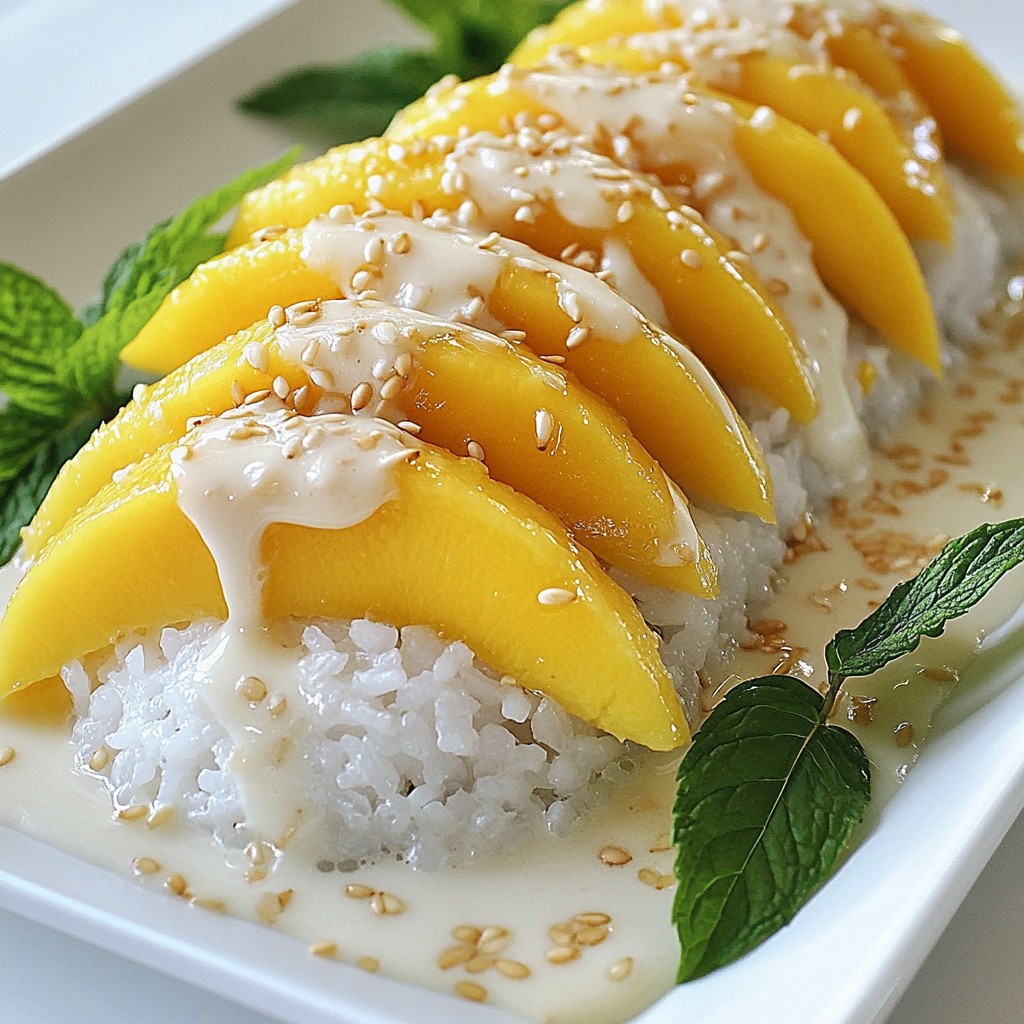
Get ready to indulge in the sweet perfection of Thai Mango Sticky Rice! This dish combines glutinous rice, fresh mangoes, and creamy coconut sauce for a delightful treat. It’s easy to make and perfect for any occasion. In this article, I’ll guide you through each simple step, share handy tips, and suggest fun variations to keep things exciting. Let’s dive into this beloved Thai dessert that you can make at home!
Why I Love This Recipe
- Exotic Flavors: This dessert perfectly combines the sweetness of ripe mangoes with the creamy richness of coconut milk, offering a delightful tropical taste.
- Simple Preparation: With just a few ingredients and straightforward steps, this recipe is easy to follow, making it accessible for cooks of all skill levels.
- Beautiful Presentation: The vibrant colors of the mango and the creamy white rice create an eye-catching dish that’s perfect for impressing guests.
- Versatile Dessert: This dish can be served warm or cold, making it a delightful treat for any occasion, from casual family meals to elegant gatherings.
Ingredients
Main Ingredients
- 1 cup glutinous rice (sticky rice)
- 1 1/2 cups coconut milk
- 2 ripe mangoes, peeled and sliced
Additional Ingredients
- 1/2 cup sugar
- 1/4 teaspoon salt
- 1 tablespoon sesame seeds (optional)
- Fresh mint leaves for garnish (optional)
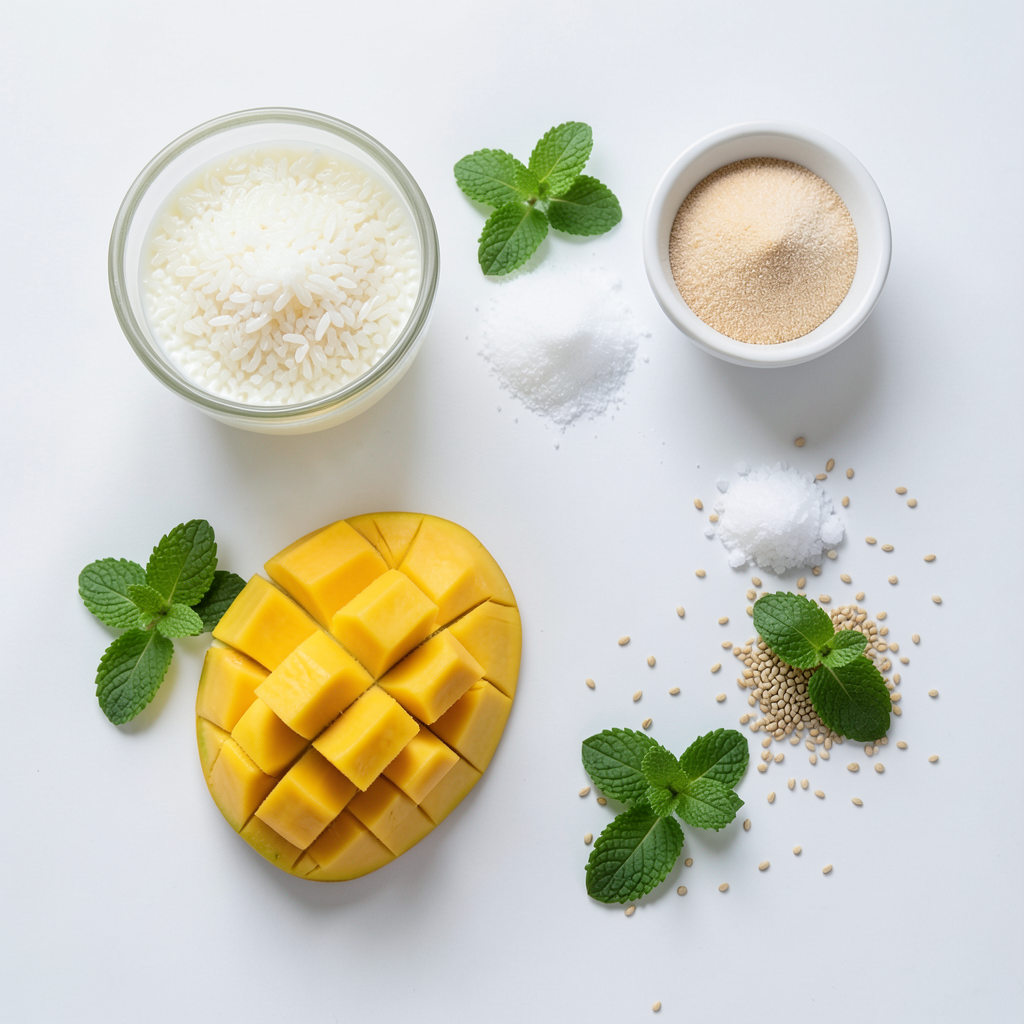
The main ingredients for Thai mango sticky rice are simple yet essential. Glutinous rice gives the dish its sticky texture. Coconut milk adds a creamy richness. Ripe mangoes provide a sweet and fresh contrast.
In addition to the main ingredients, a few extras make this dish special. Sugar enhances the sweetness, while salt balances the flavors. You can also add sesame seeds for crunch and mint leaves for a fresh touch.
When choosing mangoes, look for ones that are ripe but not overripe. They should yield slightly to gentle pressure. This balance ensures a perfect flavor and texture.
Gather these ingredients, and you’re ready to create a delightful dessert that celebrates the best of Thai cuisine!
Step-by-Step Instructions
Preparation Steps
- Rinse and soak the glutinous rice: Start by rinsing the glutinous rice under cold water. Keep rinsing until the water runs clear. This step removes excess starch. Next, soak the rice in water for at least 4 hours. If you can, soak it overnight. This makes the rice soft and ready to cook.
- Steam the rice: After soaking, drain the rice well. Line a steamer basket with cheesecloth. This stops the rice from falling through. Place the rice in the steamer and steam over simmering water for about 20 to 25 minutes. The rice will look translucent and feel sticky when ready.
Making the Coconut Sauce
- Combine coconut milk, sugar, and salt: While the rice steams, prepare the coconut sauce. In a medium saucepan, mix coconut milk, sugar, and salt over medium heat. Stir often until the sugar dissolves. Do not let it boil. Once done, take it off the heat.
- Reserve some sauce for serving: Set aside about 1/4 cup of this coconut sauce. You will use it later to drizzle over the dish.
Combining and Serving
- Mix cooked rice with coconut sauce: After the rice is cooked, transfer it to a large bowl. Pour the remaining coconut sauce over the hot rice. Gently fold it in with a spatula. Make sure each grain of rice gets coated. Let it rest for about 10 minutes to blend the flavors.
- Plate the dish with mango slices and sauce: To serve, scoop a generous amount of sticky rice onto a plate. Create a small mound. Place the sliced mangoes next to the rice for a nice pop of color. Drizzle the reserved coconut sauce over the rice. This adds extra creaminess and flavor.
Tips & Tricks
Achieving Perfect Sticky Rice
Soaking the rice is key. This step helps the grains absorb water. I recommend soaking for at least 4 hours or overnight. This softens the rice and makes it sticky.
Next, use a steaming technique for the best texture. After soaking, drain the rice well. Line a steamer basket with cheesecloth. This prevents the rice from falling through. Steam the rice over simmering water for 20-25 minutes. It’s done when it looks translucent and feels sticky.
Flavor Enhancements
You can adjust the sweetness to your taste. Start with the recipe's sugar amount. If you like it sweeter, add a little more.
Adding flavor with coconut cream also enhances the dish. The coconut sauce gives a rich taste. Reserve some of the sauce for drizzling later. This adds creaminess and flavor on top of the rice. Enjoy experimenting with these tips!
Pro Tips
- Soaking Time Matters: Soaking the glutinous rice for at least 4 hours or overnight ensures the grains become tender and sticky, resulting in the perfect texture for your dessert.
- Watch the Steaming: Ensure the water in your steamer is simmering but not boiling vigorously. Too much heat can cause uneven cooking or make the rice mushy.
- Coconut Sauce Consistency: Stir the coconut milk mixture continuously until the sugar dissolves, but avoid boiling it to maintain a smooth and creamy sauce without curdling.
- Serve Warm: This dessert is best enjoyed warm. Allow the rice to rest after mixing it with the coconut sauce to enhance the flavors before serving with fresh mango slices.
Variations
Alternative Fruits
You can switch out mangoes for other fruits. Bananas and papayas work well. Their sweet and soft texture pairs nicely with sticky rice. You can also use seasonal fruits like strawberries or peaches when they are fresh. This adds variety and color to your dish. Get creative! Mix and match fruits to find your favorite combinations.
Vegan and Dairy-Free Options
For a vegan version, you can choose coconut alternatives. Almond milk or soy milk can replace coconut milk. These options still give a creamy texture. If you want it gluten-free, ensure you buy certified gluten-free sticky rice. Always check labels on products to avoid hidden gluten. This way, everyone can enjoy this tasty dish!
Storage Info
Leftover Storage
To keep leftover sticky rice fresh, follow these tips:
- Cool down the rice: Let the sticky rice cool to room temperature.
- Use an airtight container: Store it in a clean, airtight container. This helps keep moisture in.
- Refrigerate: Place the container in the fridge. Sticky rice lasts about 3 to 4 days.
For the mangoes, you want to keep them fresh:
- Wrap slices: Wrap leftover mango slices in plastic wrap. This prevents them from browning.
- Use a container: Store wrapped mango in a sealed container in the fridge. They are best eaten within 1 to 2 days.
Reheating Instructions
To reheat sticky rice without losing its texture, follow these methods:
- Steam it: Place the rice in a steamer basket. Steam for about 5 to 10 minutes. This keeps the rice moist and sticky.
- Microwave: Place the rice in a microwave-safe bowl. Add a splash of water, cover it with a damp paper towel, and heat for 30 seconds at a time. Stir in between to ensure even heating.
For leftover mango slices, try these tips to refresh them:
- Add a squeeze of lime: This brightens the flavor and helps with browning.
- Serve cold: Enjoy mango slices straight from the fridge for a refreshing taste.
FAQs
What is glutinous rice?
Glutinous rice is also known as sticky rice. It is a special type of rice that is very sticky when cooked. This rice has a high starch content, which makes it perfect for desserts. In Thai Mango Sticky Rice, glutinous rice gives a soft and chewy texture. You can use it in many Asian dishes, such as rice cakes or dim sum. It absorbs flavors well, making it a great base for sweet and savory meals.
Can I make Thai Mango Sticky Rice ahead of time?
Yes, you can prepare some parts of Thai Mango Sticky Rice ahead of time. Soak the rice the night before. This makes it easier to cook. You can also prepare the coconut sauce in advance. Just store it in the fridge until you need it. However, I recommend slicing the mangoes just before serving. This keeps them fresh and bright. When you are ready to serve, heat the rice slightly and mix it with the coconut sauce.
How do I know the rice is cooked?
You can tell the rice is cooked by checking its appearance and feel. Cooked glutinous rice should be translucent and sticky. It should not feel hard or crunchy. You can also taste a small grain to check if it's soft. If it is soft and sticky, it is done. Steaming should take about 20-25 minutes. If you see steam rising and the rice feels warm, it is likely ready to enjoy!
Thai Mango Sticky Rice is a delightful treat made with glutinous rice, coconut milk, and ripe mangoes. You learned how to prepare it step-by-step, from soaking the rice to perfecting the coconut sauce. Remember the tips for texture and flavor, like using seasonal fruits and vegan options. Store leftovers properly and follow reheating tips to keep the dish fresh. Enjoy making this sweet treat, and share it with friends for a tasty experience!